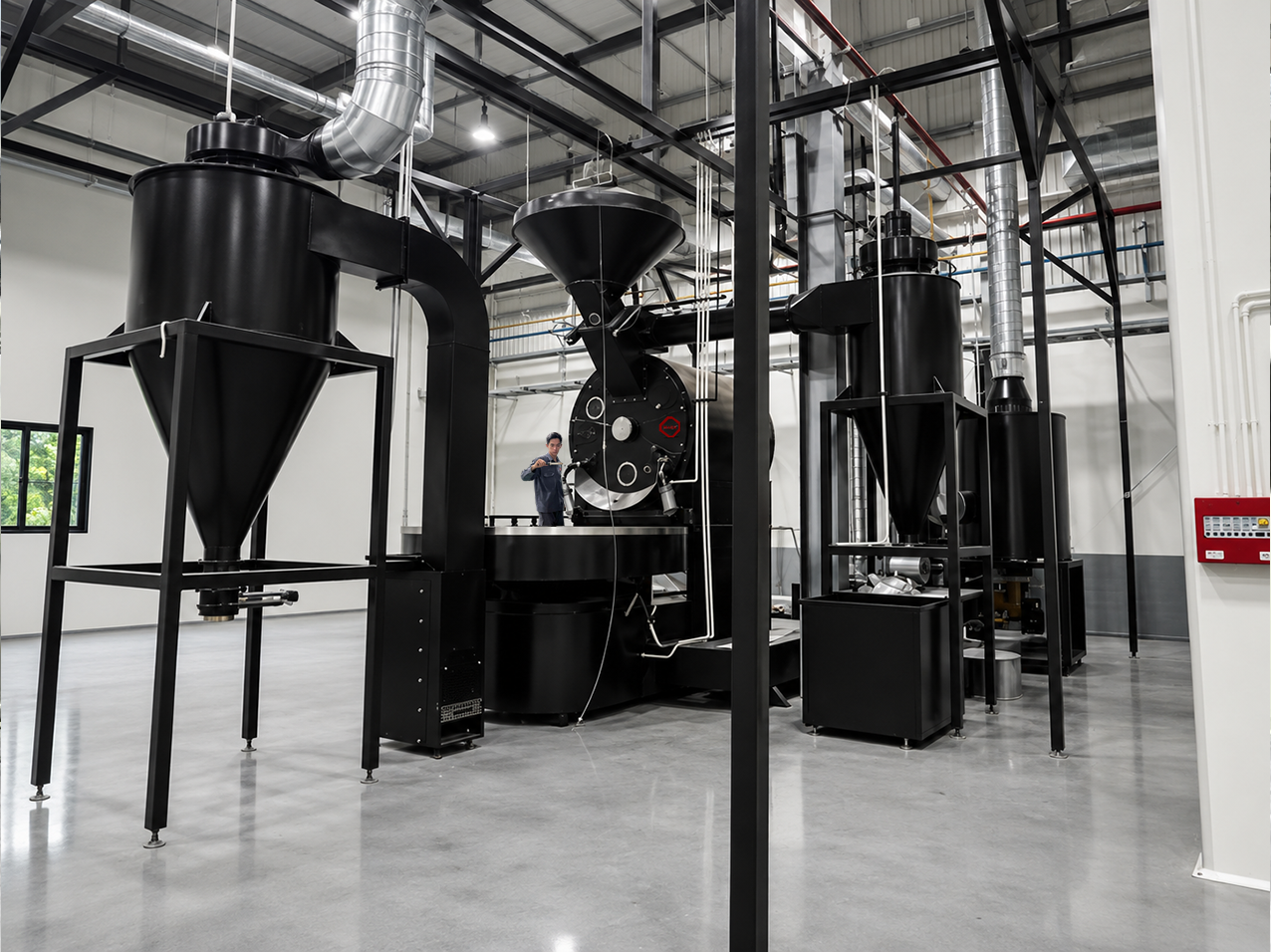
As Vietnam’s coffee industry expands into export and deep processing, roasting quality has become a critical bottleneck. Without standardized, repeatable roasting, consistency and long-term competitiveness in global markets remain difficult to achieve.
Why Coffee Roasting Quality Remains a Bottleneck in Vietnam’s Coffee Industry?
Why Coffee Roasting Quality Remains a Bottleneck in Vietnam’s Coffee Industry?
Over the past decade, Vietnam’s coffee industry has entered a phase of strong growth, both in production scale and economic value. However, as the market continues to expand and competition becomes increasingly intense, a fundamental issue has become more apparent: the standardization of quality in coffee roasting.
This is no longer an internal technical matter of individual roasting workshops. It has become a decisive factor affecting competitiveness, brand credibility, and Vietnam’s ability to participate more deeply in the global coffee value chain.
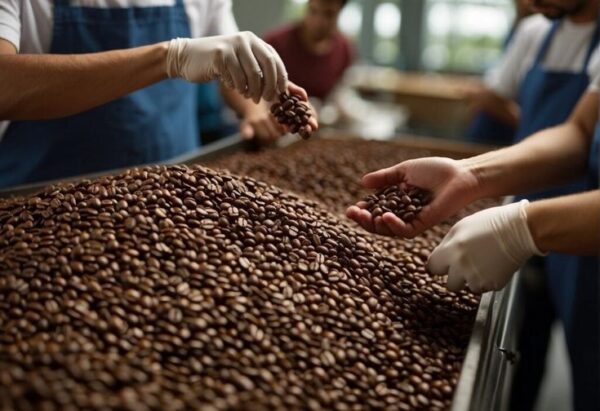
Quality Inspection of Coffee Beans After the Roasting Process in Production.
Export Growth Raises New Requirements for the Coffee Roasting Industry
According to the Ministry of Industry and Trade, in the first 10 months of 2025, Vietnam’s coffee exports reached 1.31 million tons, with a total value of USD 7.42 billion an increase of 13.4% in volume and 61.9% in value compared to the same period in 2024. The average export price reached USD 5,660 per ton, up by as much as 42.7%.
Notably, the Ministry emphasized that this growth was not driven by price alone, but also reflected improvements in quality and product structure. In particular, the share of roasted, ground, and deeply processed coffee has continued to increase. In 2024, Vietnam’s processed coffee exports surpassed USD 1 billion, ranking second in value after Robusta coffee.
As Vietnam maintains its position as the world’s leading Robusta exporter, major markets such as the EU, the United States, Japan, and Russia are no longer demanding volume alone. They increasingly require flavor consistency, repeatable quality, and compliance with safety standards.

In this context, coffee roasting is no longer a final technical step, but a critical stage that determines the value-creation capacity of the entire production chain.
In essence, coffee roasting is not simply about creating flavor. It is a process of simultaneously controlling multiple variables temperature, time, airflow, bean moisture, and the rate of heat development at each stage, accurately enough to achieve the desired roast profile.
Without a clearly defined and well-operated technical system, roasting becomes heavily dependent on personal intuition and individual experience. This makes quality unpredictable and inconsistent across batches. Each roast becomes an experiment rather than a controlled outcome. Only when technical variables are standardized and consistently measured can coffee quality be reliably repeated, scaled, and sustained over time.
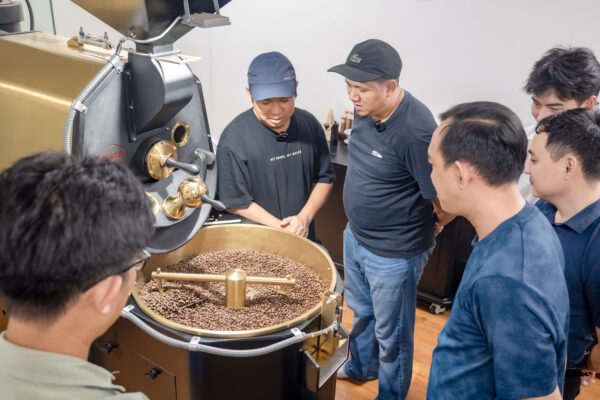
Modern technology driven coffee roasters with fully automated processes.
Industry practice has shown cases where roasters lost customers due to inconsistent quality, or coffee chains were forced to change suppliers because roast profiles could not be replicated consistently across batches. Poor operational control and inadequate heat management have even posed safety risks during production.
Market reality has gradually confirmed what many industry professionals already understand: when operating at a small scale, deviations may be tolerable. But when supplying chains or exporting, even minor inconsistencies in roasting can disrupt the customer experience and erode partner trust.
The Technical Gap Behind the Growth of the Roasting Industry
The current challenge of Vietnam’s coffee roasting industry does not lie in a lack of equipment. The market offers a wide range of machines, from high-end imported models to more affordable domestic options.
The real gap lies in the technical operating foundation throughout the roasting process. Imported machines meet international standards but are costly and difficult for most small and medium-sized roasters to access. Conversely, lower-cost machines reduce initial investment but often lack precise control, making it difficult to ensure stability as operations scale.
As regional competition intensifies, Vietnamese coffee faces increasing pressure to maintain market share, especially as many markets actively diversify their supply sources. In Thailand, data from the Agency of Foreign Trade (Ministry of Industry and Trade) shows that in the first seven months of 2025, Vietnam’s coffee market share dropped sharply from over 67% to around 26%. Meanwhile, Laos emerged as the largest supplier, alongside increased imports from Indonesia, Malaysia, and Brazil.
This diversification reflects a broader reality: markets are no longer dependent on a single country, and buyers now have more alternatives than ever. As advantages in volume and price gradually narrow, the key factor in maintaining long-term relationships becomes the ability to deliver stable, consistent coffee quality over time.
The Responsibility of Technology Providers in the Industry
In the effort to raise industry standards, responsibility cannot rest solely on roasters or workshop owners. Technology providers the companies that design, manufacture, and supply roasting machines—have a direct influence on the overall quality baseline of the industry.
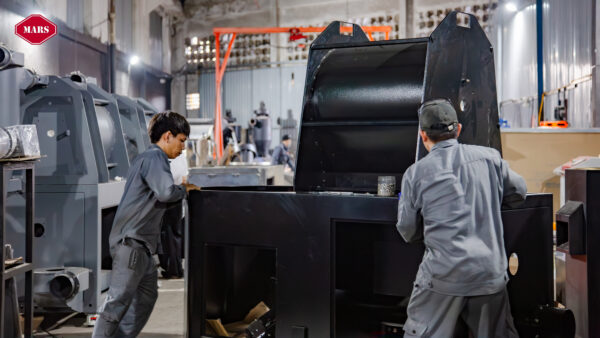
The Mechanical Engineers Building Coffee Roasters at Mars Roaster’s Workshop.
Stable coffee quality is the result of collaboration between the roaster’s skill and the technical foundation behind it. When machinery is properly designed and operates consistently, roasters can effectively control critical parameters, reduce deviations, and fully apply their expertise, rather than compensating for equipment limitations.
This marks the boundary between merely supplying machinery and developing technology with long-term responsibility for quality and the sustainable development of the coffee roasting industry.
In this context, technological direction becomes a decisive factor. Mars Roaster was founded in 2016, at a time when coffee roasting in Vietnam was beginning to shift from heavy reliance on personal experience toward a demand for stable technical control and repeatable quality.
From 2016 to 2026, Mars continuously upgraded its roasting technologies, from Mars V1 to Mars V4, an industrial-oriented automatic roasting system, and most recently Mars V5, an AI-powered roasting technology launched in 2025. Step by step, Mars has brought coffee roasting closer to a data-driven control foundation, a trend recognized by industry experts and specialized media.
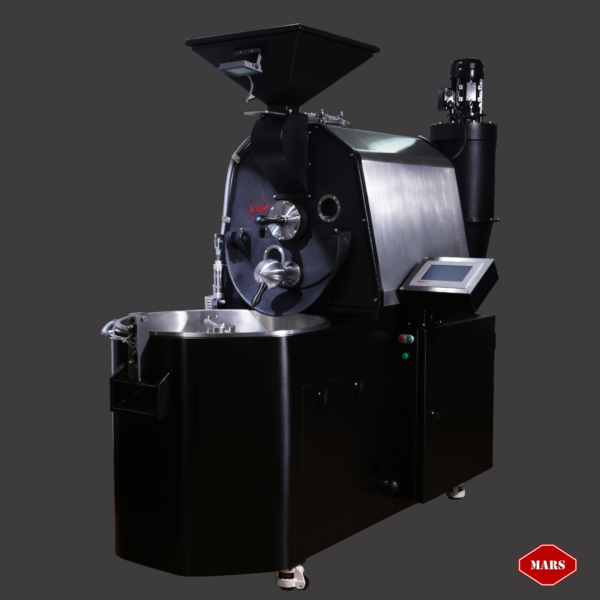
6 kg Coffee Roaster – Mars V5 Roasting Technology.
However, technological responsibility goes beyond machine development alone. Long-term partnership is equally essential. Maintenance, servicing, and lifetime technical support are considered integral parts of the product at Mars, helping roasting facilities maintain consistent quality over time.
From a long-term perspective, Mars’ vision extends beyond the domestic market toward building roasting machines that meet international standards and can compete globally. As the global coffee industry becomes increasingly standardized, serious investment in technology is viewed as a shared responsibility to help Vietnam’s roasting sector maintain its position in the global value chain.
Standardizing Coffee Roasting in a Global Market Context
Expanding coffee exports to high-standard markets and promoting deeply processed coffee impose mandatory requirements for quality and roasting consistency. Elevating roasting standards is therefore no longer optional is inevitable.
Standardizing coffee roasting not only improves individual product quality but also forms the foundation for building a Vietnamese coffee brand with a clear and credible position in the international market.
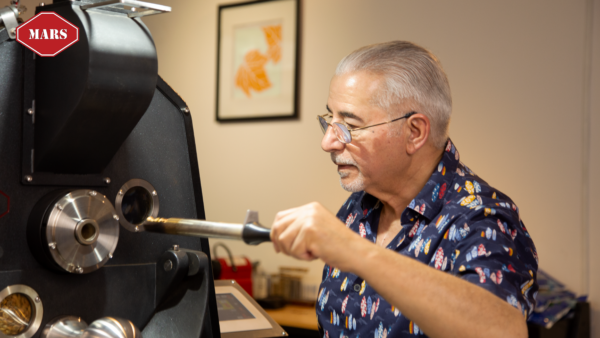
Mars V5 Roasting Technology – Customers experience the Mars V5 roasting machine
This is not the task of any single company. But every meaningful change begins with organizations willing to develop technology responsibly and prioritize the long-term interests of the industry over short-term gains.
For Mars Roaster, the past 10 years have not simply been a story of product development. They represent a consistent path one of accompanying Vietnam’s coffee roasting industry through standardization, professionalization, and sustainable development.
See how roasting technology is shaping competitive advantage here.