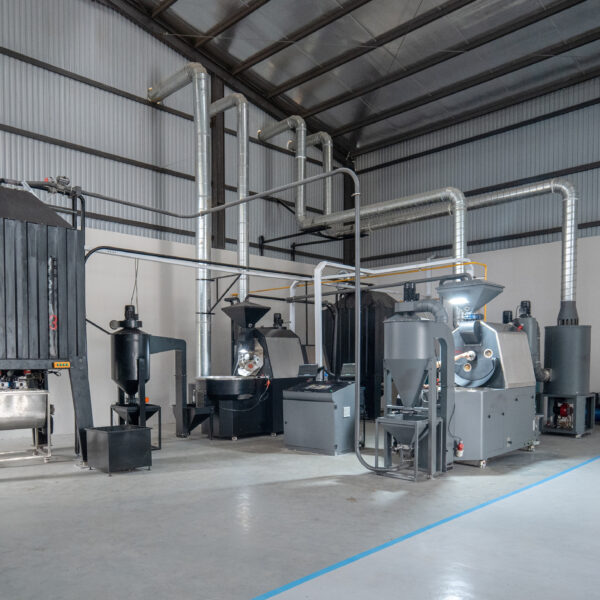
Why is AI-driven coffee roasting trusted by professionals?
Why is AI-driven coffee roasting trusted by professionals?
For nearly a decade, coffee roasting has been widely regarded as an “art” — one that relies heavily on experience, sensory judgment, and the personal finesse of the roaster. However, as the coffee industry enters a new phase defined by scale, supply-chain integration, and export growth, the limitations of traditional roasting methods, including conventional industrial automatic roasters, are becoming increasingly evident.
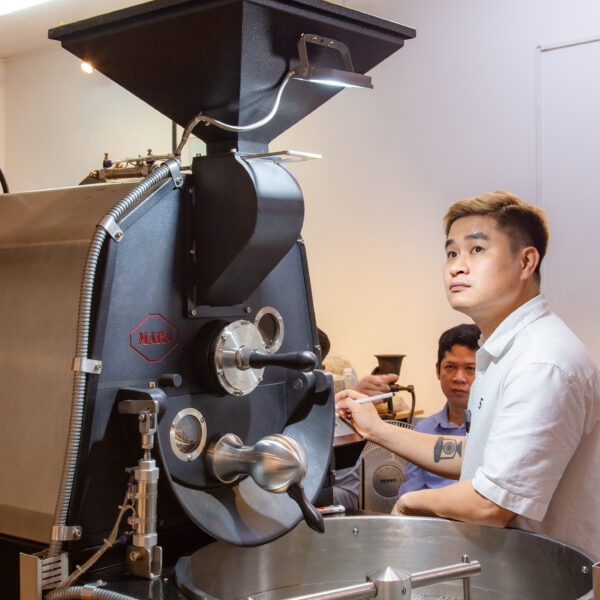
Coffee Roasting Operated by AI Technology
In recent years, AI-integrated coffee roasting systems have moved beyond being a conceptual innovation. They are now emerging as a core pillar of smart roasting technology, enabling professional roasters to manage quality through data rather than intuition alone.
The rapid adoption of AI roasting across countries with advanced coffee industries signals that this is not merely a passing technology trend. Instead, it reflects a real operational need: tools that can address inherent variables in raw materials, environmental conditions, and long-term production stability.
Today, AI-powered roasting systems are already being deployed across many mature coffee markets worldwide. They share a common foundation — data-centric control combined with automation and analytical intelligence. These systems support operators by improving process control, increasing batch repeatability, and stabilizing quality over time.
Does the AI roasting technology truly ensure consistent quality of roasted coffee?
Even with increasingly advanced roasting equipment, each roast batch remains subject to a complex set of variables. Green coffee differs from lot to lot in moisture content, density, screen size, fermentation level, and origin. A moisture variation of just 3–5% can significantly alter how beans absorb and release heat during roasting.
These factors make roasting inherently difficult to predict, especially when multiple variables shift simultaneously. Even highly experienced roasters face real technical challenges in accurately sensing and responding to every internal change occurring inside the drum, batch after batch.
At smaller production scales, skilled roasters can rely on intuition and manual adjustment. But as volume increases, heavy dependence on human perception becomes a structural risk. No individual can maintain peak concentration while operating dozens or hundreds of consecutive batches per day. Even minor deviations can lead to off-profile roasts, resulting in financial loss and potential damage to brand reputation.
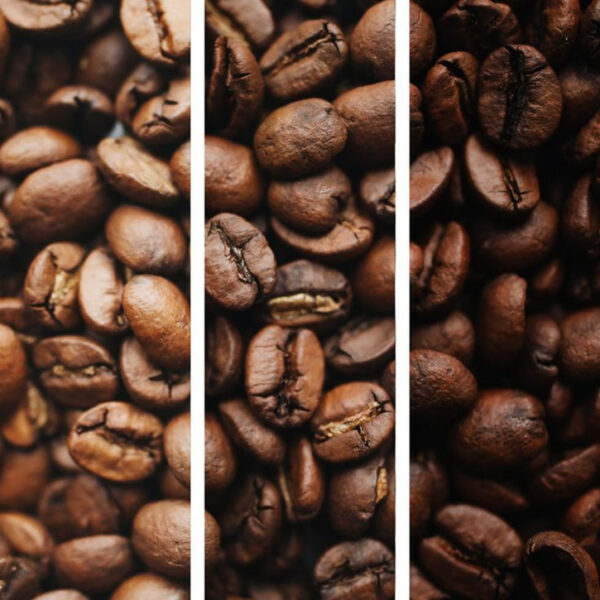
Inconsistent Coffee Roasting Batches in Color and Flavor
Beyond operational complexity, changing market expectations are also driving the adoption of AI roasting. The rapid growth of the specialty coffee segment demands near-perfect flavor consistency across batches. Coffee chains require uniform quality to ensure consistent customer experience across all locations. Export markets, meanwhile, impose strict standards on roast profile transparency, color consistency, and batch uniformity.
Growing Consumer Demand for Specialty Coffee
Under these conditions, traditional manual roasting and conventional industrial automation struggle to keep up. Their processes remain heavily dependent on individual skill, while lacking the analytical capability to continuously predict, adjust, and optimize outcomes over extended periods. This is where the industry begins seeking technological solutions that can deliver stable, precise quality while supporting long-term scalability and professionalization.
Global reaction to the use of AI roasting technology in production.
Across the global coffee roasting industry, a clear transformation is underway. Artificial intelligence is increasingly becoming a core operational foundation for professional roasteries. In markets such as North America and Europe, leading roaster manufacturers have already developed control architectures built on data-driven automation, where roasting parameters are continuously analyzed and adjusted through algorithms.
As modern roasting evolves, equipment manufacturers and technology platforms worldwide are investing heavily in intelligent control systems that tightly integrate hardware with data analytics software. These solutions are designed to standardize large-scale roasting processes, improve energy efficiency, and enhance batch-to-batch consistency.
A common principle unites these approaches: placing data at the center of operations. From heat input and airflow to timing and real-time roast profile analysis, roasting control is shifting away from subjective perception toward data-governed execution. This transition enables stable quality while supporting sustainable production at scale. As a result, AI-driven roasting is increasingly recognized as a new industry benchmark, particularly within specialty coffee, multi-site operations, and export-oriented production.
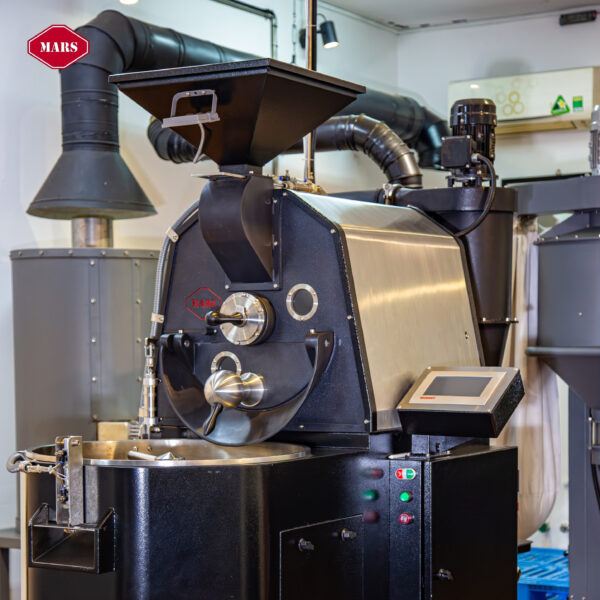
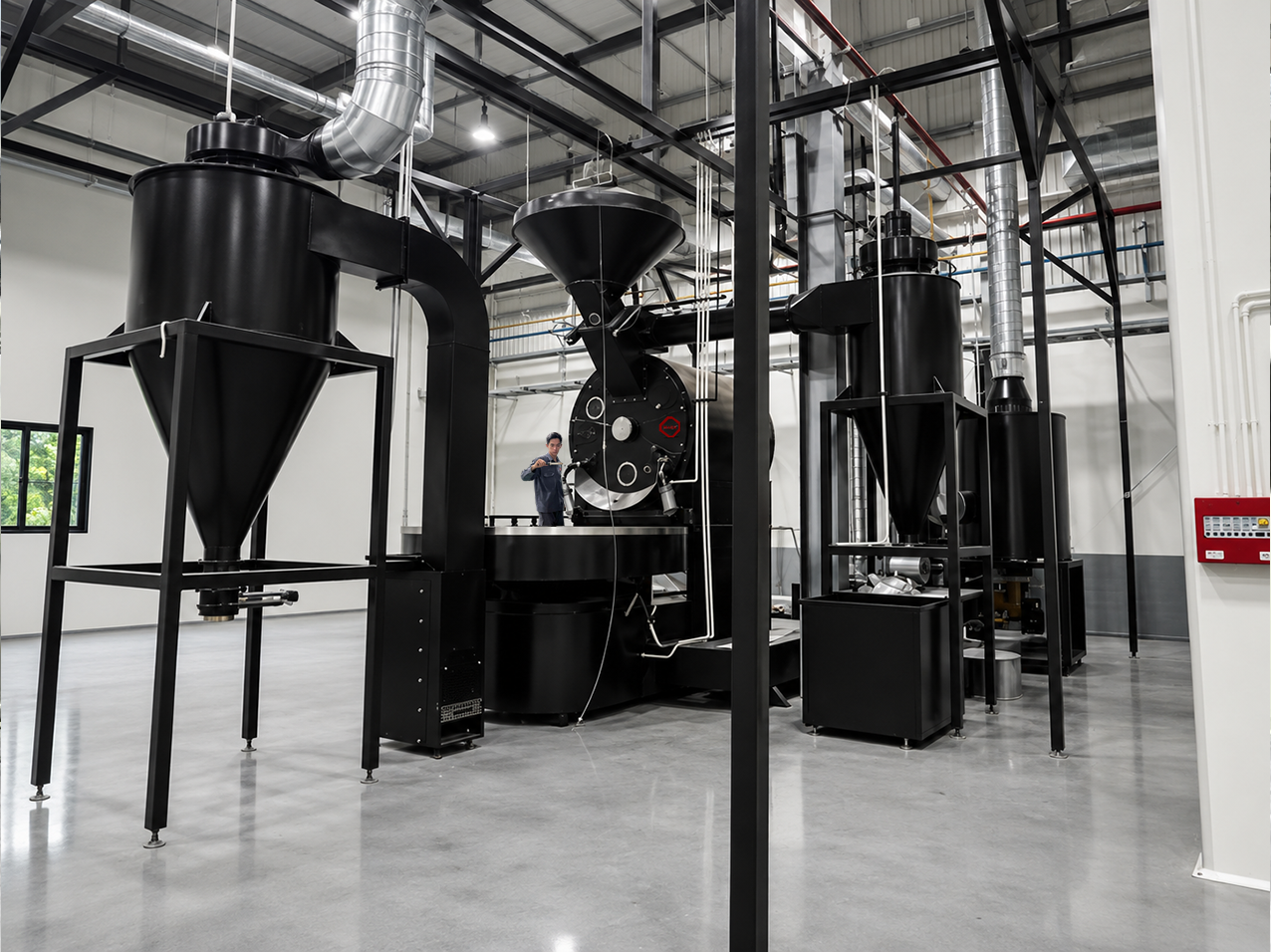
Mars Roaster 6kg Coffee Roaster Powered by AI Technology
Within this global shift, Mars Roaster has developed the AI-powered Mars V5 smart roasting system as a response aligned with modern industry demands.
Unlike systems that primarily record data or operate on predefined scripts, Mars V5 applies AI to actively control the entire roasting process. The system analyzes green bean characteristics, monitors each roast in real time, and dynamically adjusts parameters such as heat input, airflow, drum speed, and energy usage. This approach enables high-fidelity replication of roast profiles, even as raw materials and environmental conditions vary.
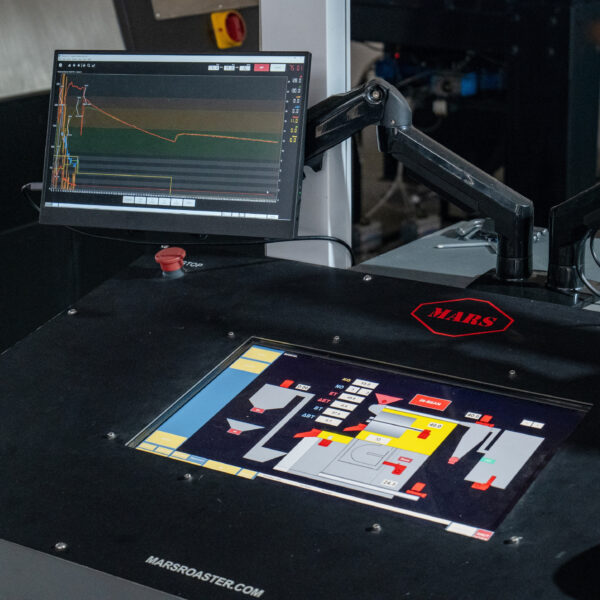
The control center of the Mars V5 AI coffee roasting system
The emergence of AI-driven roasting technology built to operate across diverse production environments highlights a broader industry trend: intelligent systems must adapt to real-world variability rather than idealized conditions. Mars V5 is designed with this principle in mind — reducing optimization time, lowering operational complexity, and supporting long-term data management without compromising international performance standards.
As AI continues to redefine operational benchmarks across the roasting industry, systems like Mars V5 reflect a shift toward technology that is not only advanced, but practical — engineered to solve real production challenges while aligning with global expectations.
When data becomes a strategic advantage in coffee roasting
The growing adoption of AI roasting systems and data analytics platforms reflects a deeper shift in roasting philosophy. Advanced technology is no longer just a support tool, it has become a genuine competitive advantage in professional roasting operations.
Fully Automated AI-Based Coffee Roasting System
Smart and automated systems like Mars V5 highlight a critical truth: data and algorithms do not replace the art of roasting. They make that art reproducible and scalable. The roaster remains central in defining flavor direction, while technology reduces dependence on subjective perception and strengthens operational control.
As data-driven roasting becomes a global norm, Mars V5 represents a meaningful step forward for modern roasteries, positioning AI as a practical partner that delivers consistent results in every batch and supports long-term, scalable growth.
Learn more about Mars V5 and how AI technology can support your roastery’s operational stability in real-world production today.
MarsBot
Mars Roaster xin chào! MarsBot có thể giúp anh/chị chọn máy rang cà phê phù hợp.