Industrial coffee roasting systems and the role of process
Industrial coffee roasting systems and the role of process
As coffee roasting facilities scale up their operations, individual stages no longer function independently but become increasingly interconnected. The concept of an industrial coffee roasting system thus emerges as a comprehensive approach to the entire roasting operation rather than relying on a single standalone machine.
In many facilities, the term “system” is sometimes still understood simply as a large-capacity roasting machine. However, from an operational perspective, an industrial coffee roasting system is actually a sequence of equipment and processes organized into a unified workflow.
In practice, many facilities invest in large-capacity roasters but still face difficulties as production volume increases. For example, roasting capacity may be expanded, yet stages such as material loading, post-roasting handling, or packaging fail to keep pace, causing disruptions throughout the production flow.
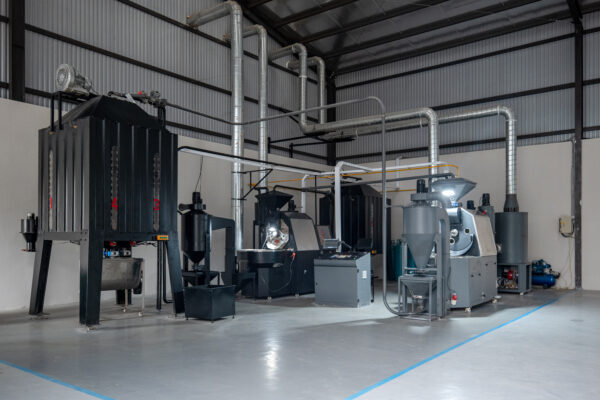
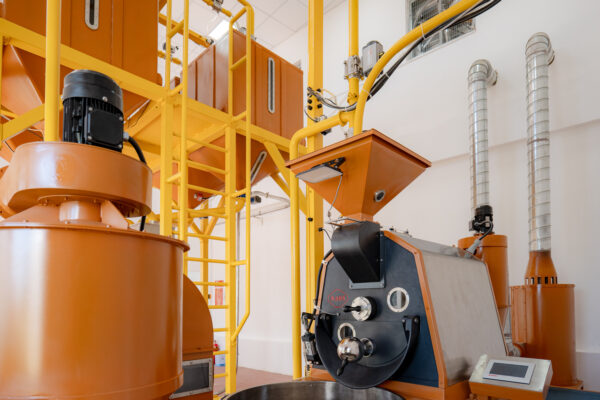
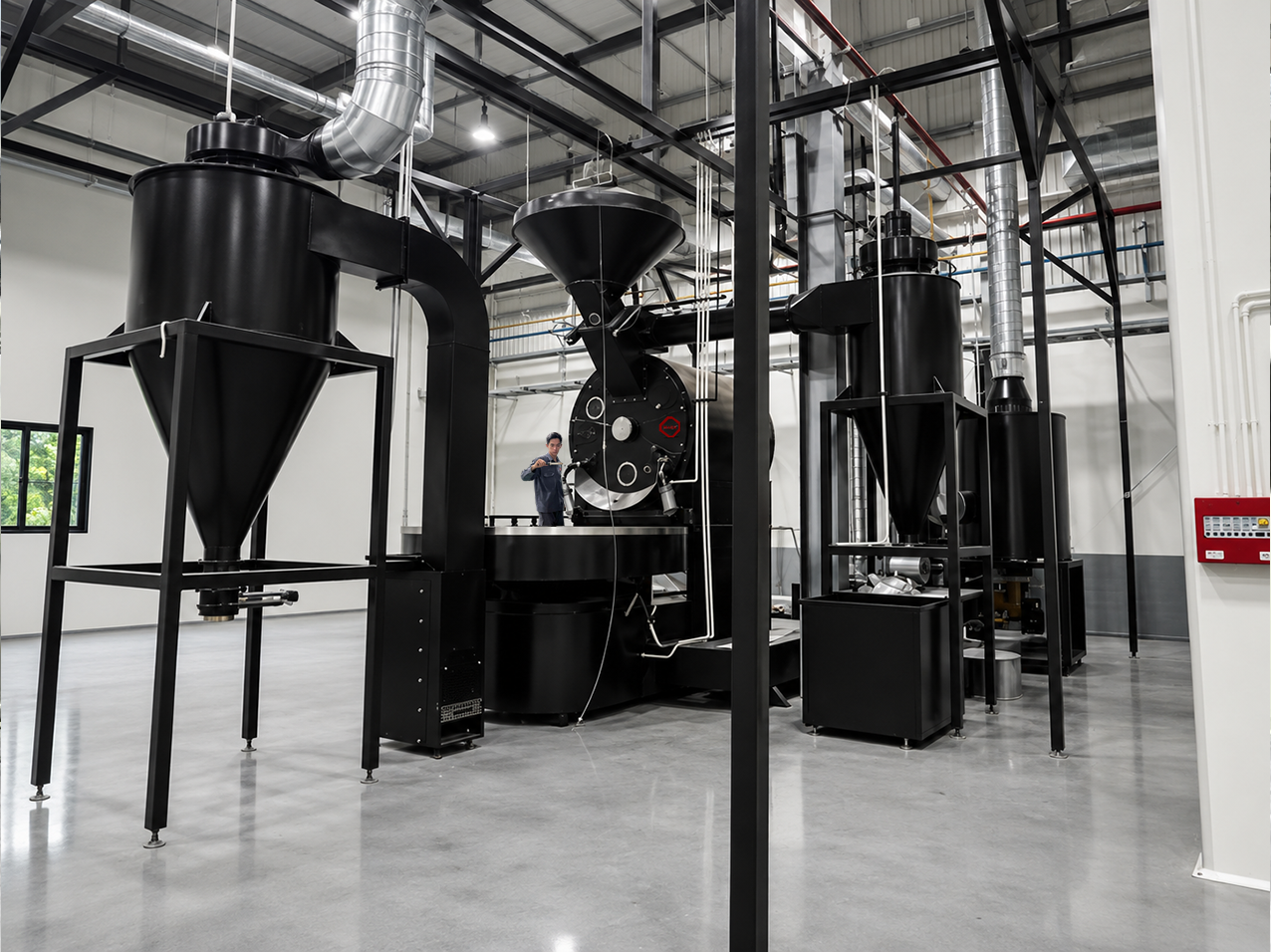
A proper coffee roasting line is structured as a closed-loop process, from loading, roasting, and post-roasting handling to blending, grinding, and packaging. Each piece of equipment performs a specific function but achieves optimal efficiency only when arranged in the correct sequence and logically integrated into the overall process.
In reality, many facilities face situations where roasting capacity exceeds post-roasting processing capability. Bottlenecks at stages such as storage silos or packaging slow down downstream production, resulting in increased finished goods inventory and difficulties in quality control.
The value of a system does not lie in individual machines but in how they are organized into a continuous production workflow that reduces reliance on manual operations and minimizes operational inconsistencies.
The trend toward investing in industrial coffee roasting systems arises from changes in operational scale and increasing production pressure, rather than merely from the need to increase capacity.
At smaller roasting facilities, stages such as loading, roasting, cooling, and packaging are often handled manually and flexibly based on individual experience. Operators typically monitor roasting profiles while also checking previous batches and preparing for the next ones.
However, while this approach allows flexibility at low production volumes, it becomes challenging when batch numbers increase, as requiring one operator to manage multiple processes simultaneously creates pressure and reduces overall control.
The problem many facilities face lies not in equipment, but in the absence of a structured process that connects operational stages. An industrial roasting process therefore becomes the foundation for reorganizing the entire production flow.
Why industrial coffee roasting systems determine long-term operational stability
As production volume grows, the challenge for roasting facilities extends beyond maintaining batch quality to sustaining operational stability over time.
In practice, the biggest challenge when production increases is not equipment capacity but maintaining operational consistency. Without a clear system structure, operations often depend on individual operators or shifts, causing production rhythms to vary with personnel changes.
An industrial coffee roasting system acts as an operational framework, organizing stages under the same logic and rhythm regardless of changes in workforce or production volume. This consistency is a decisive factor for the long-term operation of commercial roasting facilities.
Once processes are established, the system supports monitoring of parameters, maintaining operational rhythm, and reducing batch-to-batch deviations. More importantly, it helps facilities maintain stability even when personnel or production volume changes.
The value of an industrial coffee roasting system lies in its operational process, where stages from loading to packaging are organized into a unified and efficiently coordinated production line.
A well-structured process enables facilities to maintain repeatability, ensure consistent product quality, and reduce operational risks as production volume grows. This is especially important for commercial roasteries where production demands and operational pressure increase over time.
For facilities seeking practical insights into organizing production processes and implementing industrial coffee roasting systems, Mars Roaster is ready to provide consultation based on real operational experience.
MarsBot
Mars Roaster xin chào! MarsBot có thể giúp anh/chị chọn máy rang cà phê phù hợp.